I’ve always been fascinated by the intersection of beauty and biology.
With my background in aesthetics, I’ve spent years researching skincare ingredients, experimenting with different routines, and trying to understand what actually makes a difference in our skin.
But over the past three months, I’ve experienced some of the most noticeable changes in my own complexion that I can remember.
My pores appear dramatically smaller. My skin looks clearer and more even, even without makeup. And the persistent red marks I used to have from acne have faded significantly.
One of the most consistent additions to my routine during this period has been KLOW, a peptide blend containing GHK-Cu, commonly known as a copper peptide.
And naturally, I wanted to understand the science behind it.
Note to self: observations ≠ evidence. Timeline dates are approximate.
The Fascinating Discovery of GHK
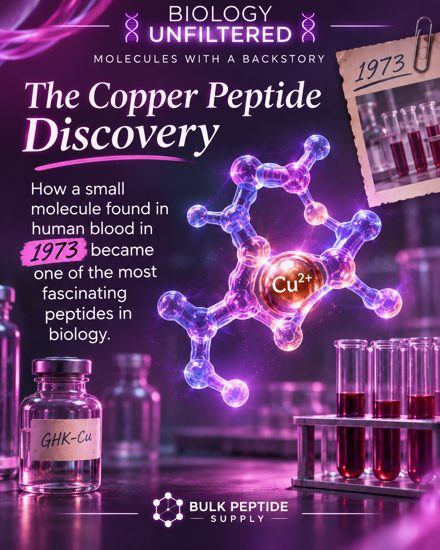
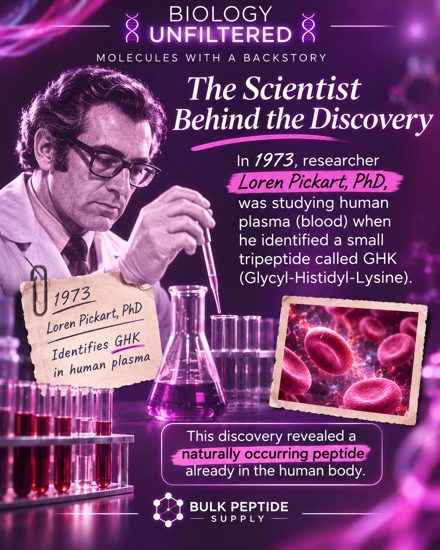
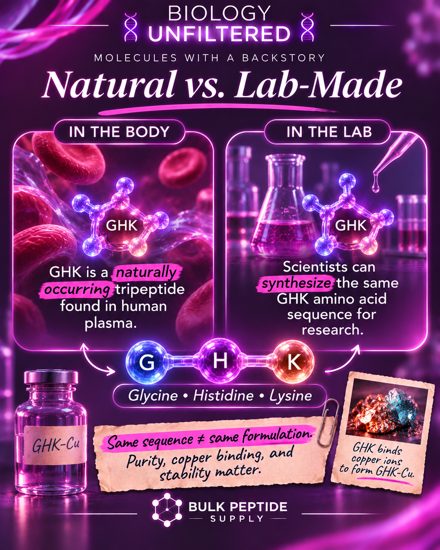
In 1973, biochemist Loren Pickart identified a naturally occurring tripeptide called GHK while studying human plasma.
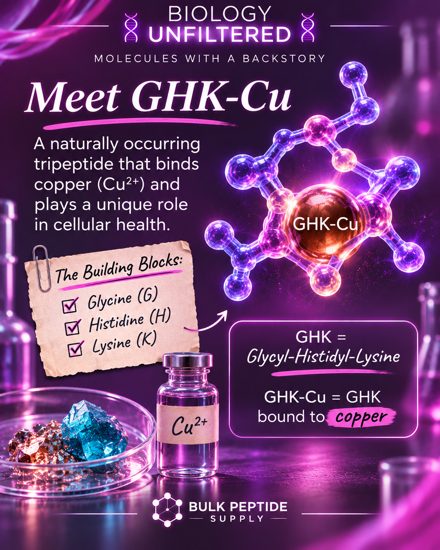
GHK consists of three amino acids: glycine, histidine, and lysine.
Researchers subsequently characterized its ability to bind copper ions, forming GHK-Cu.
What fascinated me was learning that GHK naturally occurs in the human body.
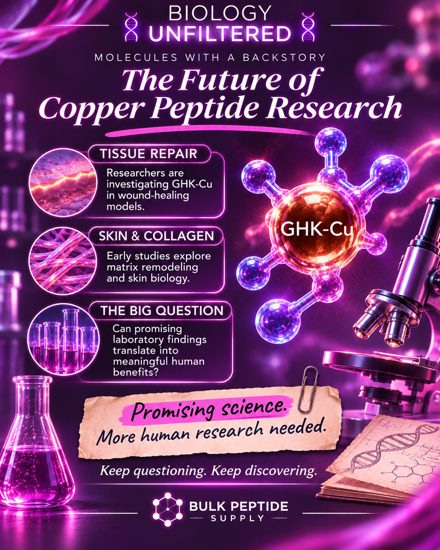
Since its discovery, scientists have investigated its involvement in collagen remodeling, cellular signaling, and tissue repair.
Although much of this research is preliminary, the history alone makes GHK-Cu an interesting molecule to explore.
Lab notebook · 1973
The 1973 Discovery
- 1973
Loren Pickart identifies GHK, a tripeptide, while studying human plasma. - Afterward
Researchers characterize its ability to bind copper ions, forming GHK-Cu. - Since
Scientists investigate collagen remodeling, cellular signaling and tissue repair. Much of this work is preliminary.
Glycine • Histidine • Lysine. Three amino acids, one small peptide that can hold a copper ion.
Natural vs. Synthetic Peptides
Naturally occurring GHK
Present in the human body, where researchers first found it in plasma.
Laboratory-synthesized GHK
The amino acid sequence can be made in a lab. That sequence is only one part of the picture.
Separate considerations: formulation, purity, stability and copper binding. Having the right sequence does not settle any of them.
My Skin Before KLOW
I’ve struggled with acne for years.
For approximately two years, I consistently used retinoids, including prescription tretinoin 0.05%, as part of my skincare routine.
Retinoids helped me tremendously.
Over time, my breakouts became less frequent, and my complexion gradually improved.
But I would still experience occasional acne, visible pores, and lingering post-inflammatory erythema, or PIE.
Those persistent red marks were especially frustrating.
Even when my acne improved, my complexion didn’t always look uniform.
I wanted to get to a point where my skin looked clear and even without relying on makeup.
Why the Timing Caught My Attention
One detail I think is important to my story is that neither Michael nor I started our skincare journeys with KLOW.
I’d already spent approximately two years consistently using retinoids to improve my acne.
Michael began following a similar skincare routine around April 2026, including prescription tretinoin 0.05%.
We both experienced improvements from skincare before introducing KLOW.
What caught my attention was the change I noticed afterward.
After introducing KLOW, I felt that my complexion began improving more rapidly, particularly the lingering redness that had bothered me for so long.
Michael also noticed changes in his skin during the first several weeks of using the blend.
This made me curious about the relationship between GHK-Cu, inflammatory pathways, and skin repair.
However, I can’t determine whether KLOW accelerated our improvements.
Retinoids can produce gradual benefits over time, and other factors may have contributed.
Being excited about what we’ve observed while remaining curious about what actually caused it.
My First Three Months With KLOW
I’ve now been using KLOW consistently for approximately three months.
I occasionally used topical skincare products containing copper peptides in the past, but those weren’t a consistent part of my routine.
During this three-month period, I’ve noticed several changes.
- Around four weeks
I began noticing visible improvements in my complexion. - Around weeks seven to eight
I experienced a very small, temporary skin flare that I would describe as a breakout. I’ve seen people online refer to similar experiences as “copper uglies,” although that isn’t a recognized medical diagnosis or established effect of GHK-Cu. My flare was barely noticeable and resolved within approximately one week. I can’t determine whether it was related to KLOW. - At approximately three months
My skin looks remarkably different to me. My pores appear significantly smaller, my complexion looks more uniform, and the redness left behind by previous breakouts has improved substantially. I’m particularly happy with how my skin looks without makeup.
Of course, I can’t attribute these changes to KLOW alone.
I was already using retinoids, which had significantly improved my acne, and I’ve incorporated a red-light mask over the past three months.
Although I haven’t used the mask as consistently, it’s another factor worth considering.
KLOW also contains multiple peptides, so even if the blend contributed to the changes, I couldn’t identify GHK-Cu as the responsible ingredient.
My Skin at Three Months: An Unfiltered Update
One thing I rarely do is take photographs without makeup.
But recently, I captured a screenshot from a TikTok video and realized just how different my skin looked compared with my earlier photographs.
I’m wearing no foundation, concealer, or complexion makeup.
The only cosmetic product I’m wearing is my usual SACHEU lip stain in P-INKED.
I also wasn’t using any beauty filters or skin-smoothing effects.
Interestingly, this photo was taken in the same bathroom as one of my earlier photographs, though the lighting, camera angle, framing and distance may differ.
Looking back at the pictures, I can see why I’ve been so excited about the changes in my complexion.
My skin appears more even, the redness is less noticeable, and I feel much more comfortable with how my skin looks without makeup.
While I’ve been consistently using KLOW during this period, I can’t determine how much of the improvement is attributable to the blend, my existing retinoid routine, red-light therapy, or other factors.
For me, documenting these changes has been just as interesting as researching the science behind copper peptides.
Skin Diary 001
Haley: earlier skin → weeks 7–8 → approximately three months
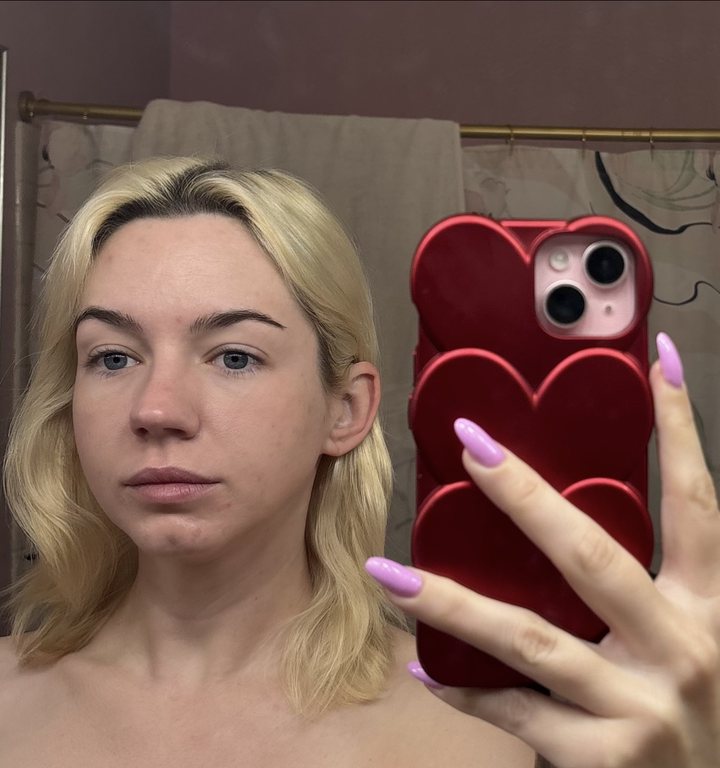
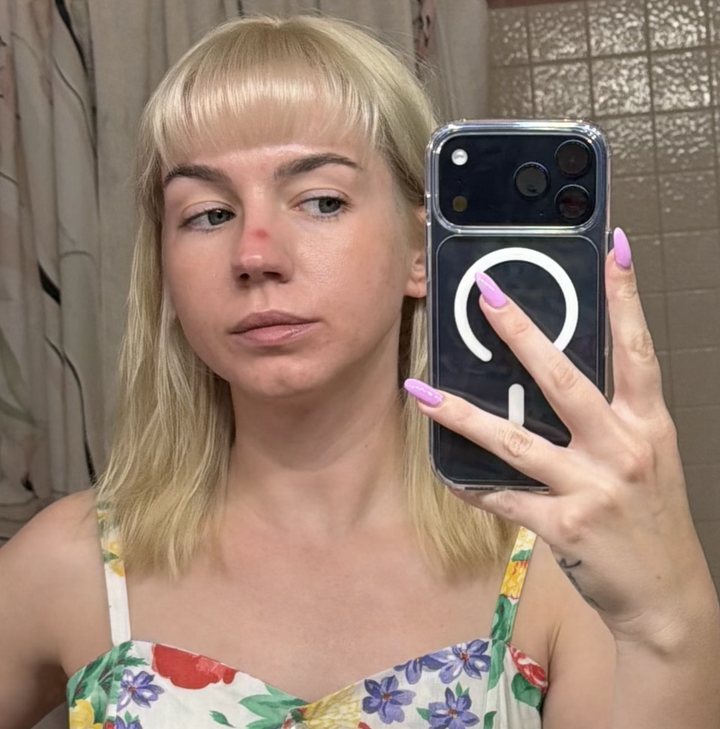
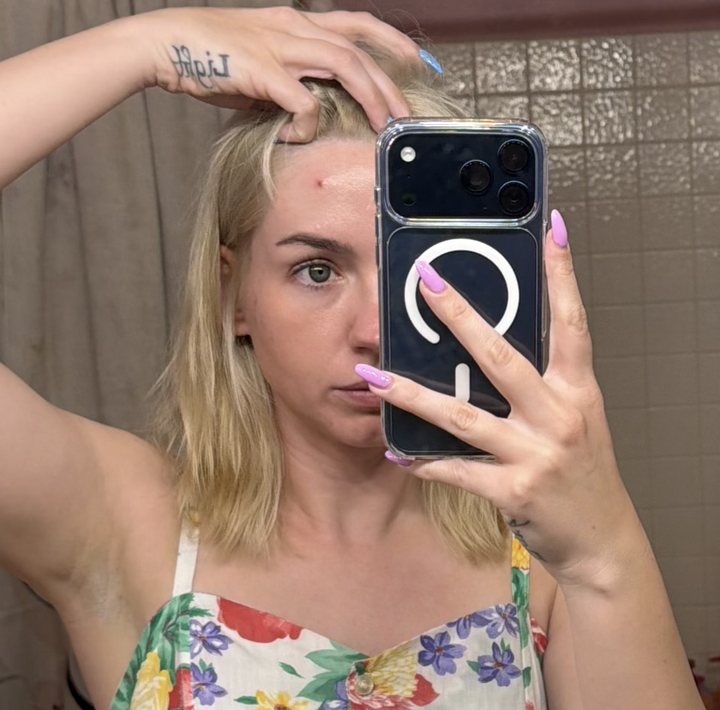

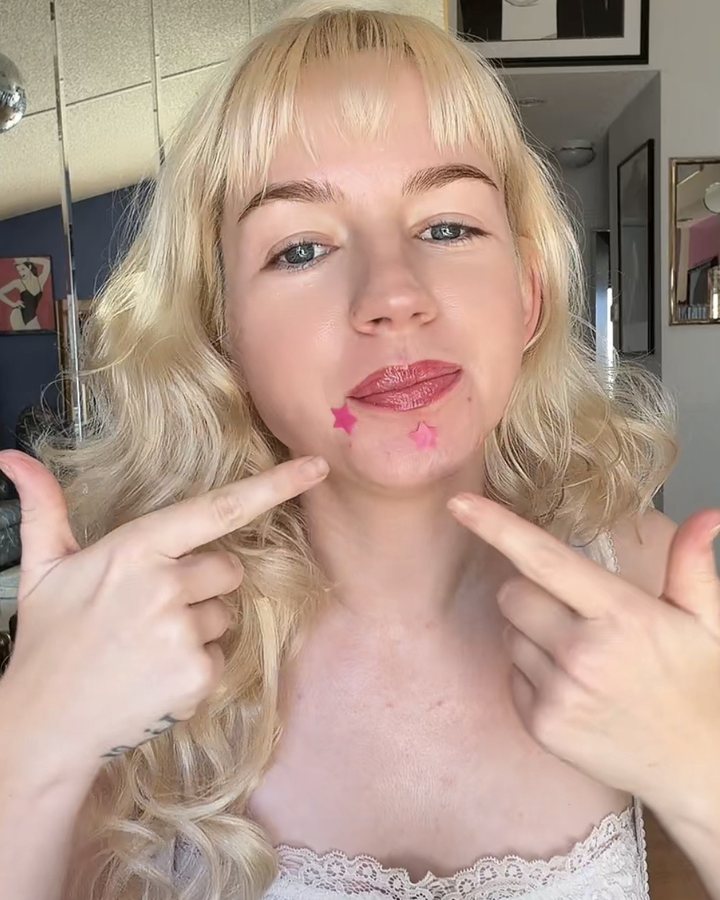

Lighting, angle and framing vary across these photos. Cropped only; no retouching.
Skin Diary 002
Michael: earlier photographs → approximately two months


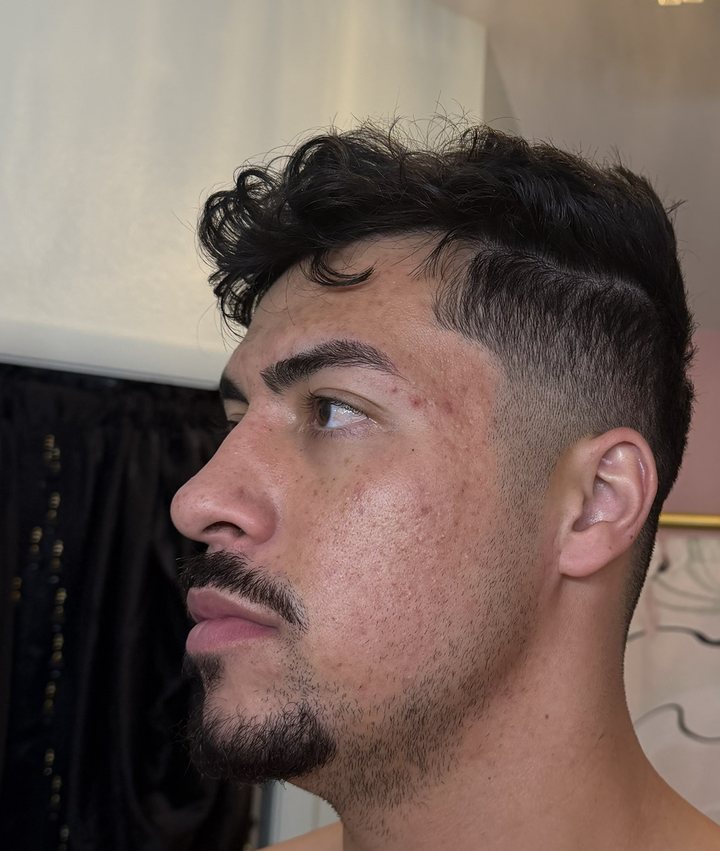

Before and after differ in lighting, angle and expression. These are not his worst historical acne.
Michael’s Experience: Almost Two Months
My boyfriend Michael has also been using KLOW and is approaching his second month.
His skincare journey actually began well before that.
When we first started dating, he struggled with more significant acne than what is visible in the earlier photographs included here.
Around April 2026, I helped him establish a skincare routine that included prescription tretinoin 0.05%.
His skin began improving before he introduced KLOW.
More recently, he added the multi-peptide blend containing GHK-Cu.
Around the four-week mark, we both began noticing additional changes in his complexion.
Looking at his earlier photographs alongside more recent ones, his skin appears clearer, with fewer noticeable blemishes and a more even overall appearance.
He still has some visible texture and residual marks, but we’re both happy with the changes we’ve observed.
Of course, these photographs aren’t proof that KLOW caused the improvements.
Acne can fluctuate naturally, and the effects of his established skincare routine may have continued developing.
Still, documenting our experiences has made us even more curious about the science behind these molecules.
What Does GHK-Cu Actually Do?
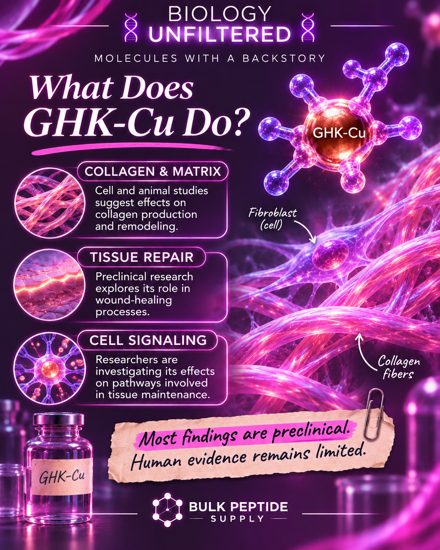
Research has explored GHK-Cu’s potential involvement in several biological processes, including:
- Collagen and extracellular matrix remodeling
- Tissue repair and wound-healing pathways
- Cellular signaling
- Inflammatory and oxidative-stress pathways
- Skin biology
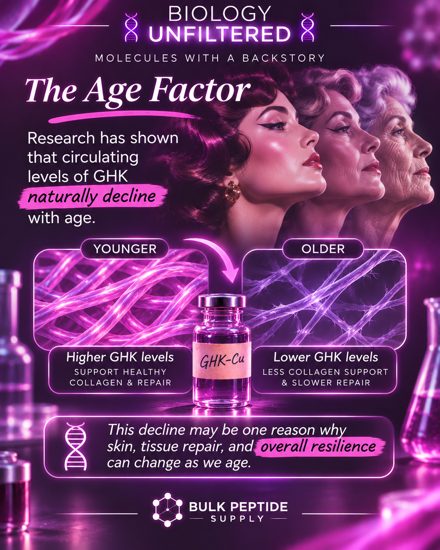
Researchers have also reported that circulating GHK levels decrease with age.
However, these findings don’t establish that administering GHK-Cu reverses aging or treats skin conditions.
Much of the research is preclinical, and the available evidence differs considerably between topical formulations and other methods of administration.
In particular, injectable GHK-Cu has limited human safety data, and the FDA has identified potential safety concerns involving immune reactions and peptide impurities.
My positive personal experience doesn’t eliminate those uncertainties.
What Researchers Are Studying
Collagen & Matrix Remodeling
Laboratory studies have explored whether GHK-Cu influences how skin’s supporting matrix is built and broken down. This does not establish a clinical benefit.
Tissue Repair
Wound-healing pathways have been examined in laboratory and animal models. Human evidence is limited.
Cellular Signaling
Researchers are studying how this small peptide may take part in signaling between cells. Many questions remain open.
Evidence vs. Experience
Personal observation Photographs can document visible changes. They cannot establish causation.
Anecdotal observations are not equivalent to controlled clinical research. Retinoids, a red-light mask, natural acne fluctuation and lighting all may play a part.
Why I’m Sharing This
I’m sharing this because I want Biology Unfiltered to be a place where personal curiosity and scientific research can coexist.
I’ve noticed changes in my skin that I’m genuinely excited about.
Michael has experienced visible improvements as well.
But I don’t believe that enthusiasm should come at the expense of scientific accuracy.
I’m interested in understanding what these molecules do, what research supports, and what questions scientists still haven’t answered.
Because sometimes the most fascinating part of science isn’t what we know.
It’s what we’re still discovering.
Keep questioning. Keep discovering.
Explore the Science Behind Peptides
Curious about peptide chemistry and the compounds being studied in laboratory research? Explore the research-focused catalog at Bulk Peptide Supply.
Explore Bulk Peptide SupplyDisclosure: Biology Unfiltered has a commercial relationship with Bulk Peptide Supply. Research-use products are not approved for human administration.
References
Labeled by type. Review articles summarize others’ work; they are not clinical proof.
- Review · preclinical and limited human data
Pickart, L., & Margolina, A. (2018). Skin Regenerative and Anti-Cancer Actions of Copper Peptides. Cosmetics, 5(2), 29. doi:10.3390/cosmetics5020029 - Review
Pickart, L., & Margolina, A. (2018). Regenerative and Protective Actions of the GHK-Cu Peptide in the Light of the New Gene Data. Int. J. Mol. Sci., 19(7), 1987. doi:10.3390/ijms19071987 - Review
Mateescu, D.-M., et al. (2026). GHK-Cu as a Bioactive Metallopeptide and Drug-Delivery Cargo: Coordination Chemistry, Formulation Science, Therapeutic Evidence, and a Translational Roadmap. Pharmaceutics, 18(9), 1077. doi:10.3390/pharmaceutics18091077 - Regulatory information
U.S. Food and Drug Administration. Certain Bulk Drug Substances for Use in Compounding that May Present Significant Safety Risks. fda.gov
From the Carousel
This article accompanies our seven-slide Instagram carousel. Follow @biology.unfiltered.